

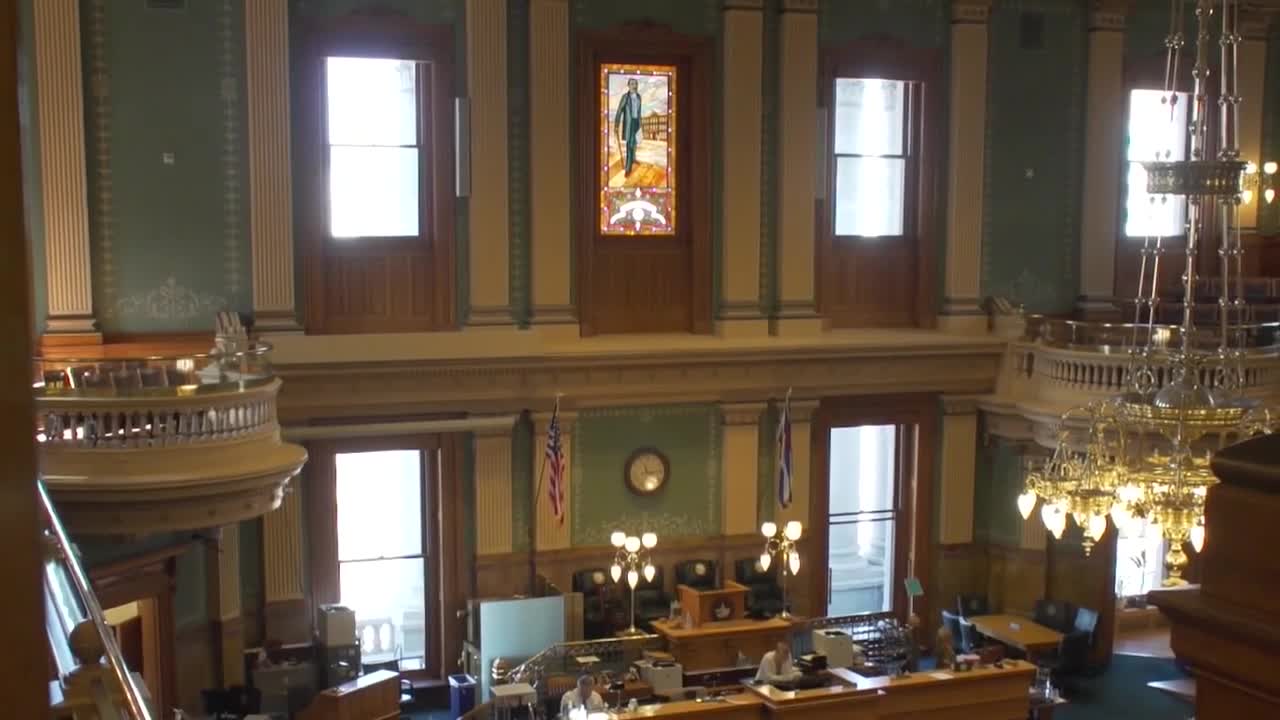


DENVER — The Colorado State Capitol can be overwhelming for first timers with the cavernous building stretching across a number of floors and new sights tucked behind every bend.
Oftentimes, the people working within the historic hallways are moving quickly, dealing with full schedules and fighting for the issues they prioritize.
But when there is a lull in the day and the sun is shining brightly through the windows in the House of Representatives, one piece of stained glass commands the attention of visitors and regulars alike.
"I always talk about Barney Ford, because he's the only stained glass portrait in the House of Representatives," Colorado Sen. President James Coleman, D — District 33, said. "It means we are here for the people, for everybody, and our responsibility is to make sure that they're represented."
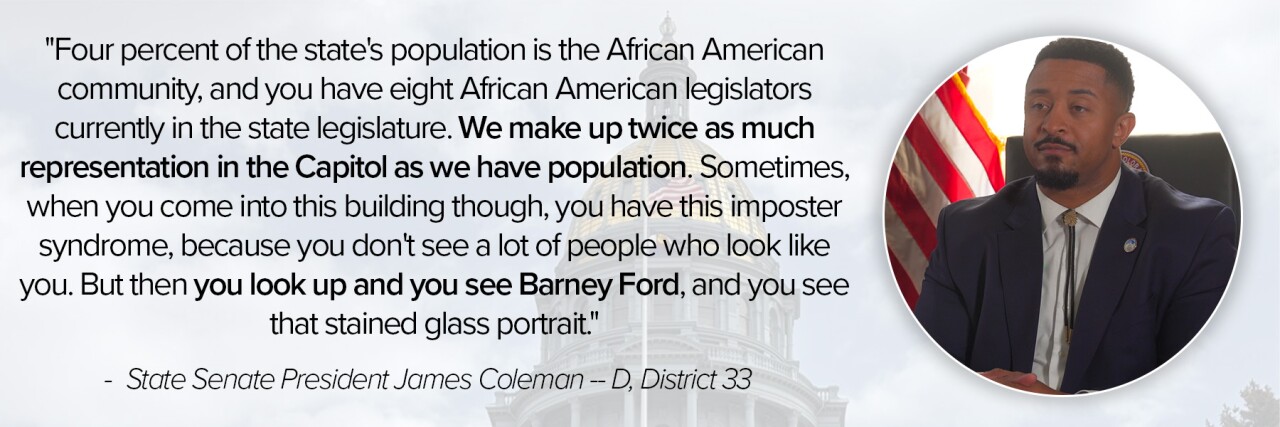
Coleman explained the impact of Barney L. Ford, who escaped slavery when he was roughly 17 years old and became a civil rights advocate and incredibly successful entrepreneur.
"Came here to Colorado, became a very prominent businessman, and before the state turned into a state from a territory, went to Washington, D.C. and said, 'I will economically support Colorado to become a state from a territory, as long as you commit that it won't be a slave state and that all people will have voting rights,'" Coleman said.
Dr. Janan Graham-Russell is an associate fellow with the Colorado Heritage for All initiative at History Colorado. To this day, she remembers going on a tour of the Colorado State Capitol as a child and seeing the portrait of Barney Ford.
"It says, I see you," Graham-Russell said about what the portrait meant to her as a young girl. "Black people have a very long history in this state, and so it's really meaningful to know that we've been here, and we will continue to be here."
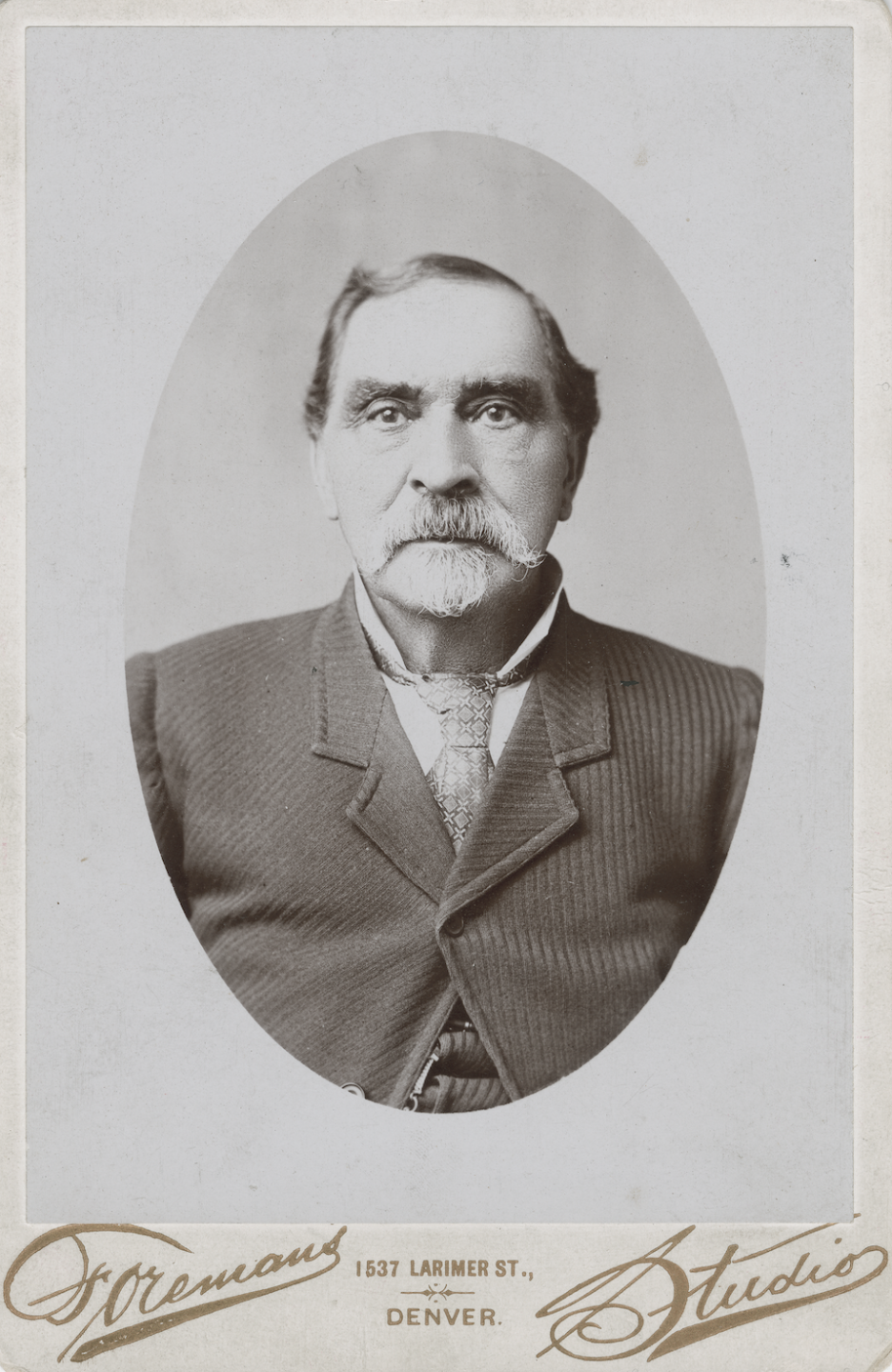
Now, Graham-Russell is very familiar with Barney Ford's story.
"Barney Ford was a big deal, as the kids would say these days," Graham-Russell said with a smile. "He really built this sort of empire, this entrepreneurial empire to establish himself, and to eventually help pass Black suffrage in Colorado."
Barney Ford's legacy is one that inspired Coleman, especially when he was a new lawmaker working in the Colorado Capitol.
"For me, it just means that I belong here," Coleman state. "It just says that the work is inclusive of everybody. Everybody should be involved in creation of policy, and everybody should be involved in the benefit of the policies that we're passing."
Coleman said he never expected to run for office when he was young. He recalled a moment when former Denver Mayor Wellington Webb visited his classroom, one that he said changed his perspective.
"I'll never forget, he walked into my classroom and he said, 'I'm the Mayor of Denver. There's a half a million people here that I represent.' And I did not know that we could be that," Coleman said. "My responsibility now is to pay that back, to pay it forward for other young Black boys and girls, and for everyone to say, 'Hey, you can be here too.'"

