



LARIMER COUNTY, Colo. — Larimer County’s first rabid bat of the season was confirmed Wednesday, as the number of cases in Colorado reached seven.
The rabid bat was found in the open space area near the Adriel Hills neighborhood in northeast Fort Collins, according to the Larimer County Department of Health and Environment. Officials said the rabid animal was caught by NOCO Humane Animal Protection & Control and later tested positive for rabies.
There are currently no known human exposures associated with this bat, county health officials said.
Data from the Colorado Department of Public Health and Environment shows this is the second rabid bad reported to state health authorities. Another one was found in Jefferson County.
Other rabid animals reported to the state so far include 5 skunks in Arapahoe, Jefferson, and Kit Carson counties, statewide data show.
So far, no humans have been exposed to rabies in the state this year.
In Colorado, rabies season traditionally begins in the spring, peaking around late summer/early fall.
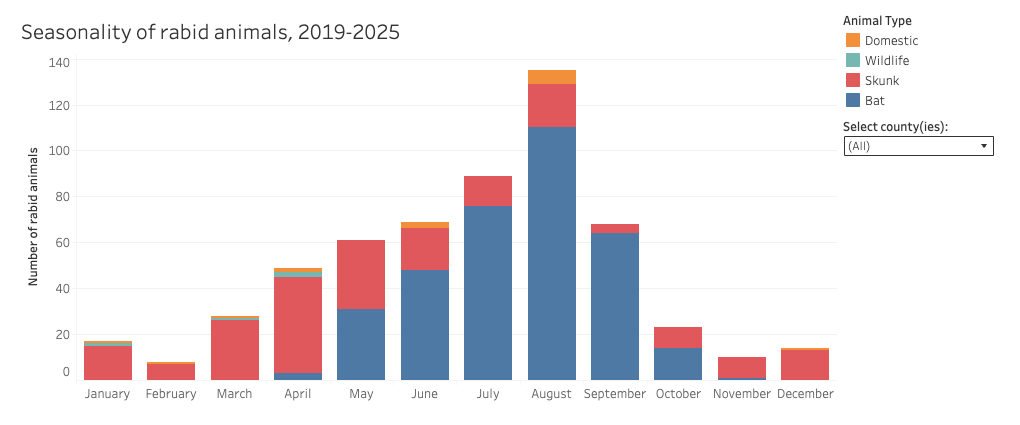
In 2025, Colorado reported 69 rabies cases, 65 of which were in bats, according to the CDPHE.
What is rabies and how you can reduce your risk of becoming infected
Rabies is caused by a virus that affects the nervous system and causes inflammation of the brain and spinal cord. It is almost always fatal when not treated soon after exposure, Weld County health officials said. The virus is shed in the saliva of infected animals.
People or animals can get rabies from the bite or scratch of a rabid animal or from a rabid animal’s saliva if it comes in contact with their eyes, nose, mouth or open wounds, in which case immediate medical attention is necessary, according to the CDC.
You can prevent getting rabies by taking the following precautions:
- Vaccinate all domestic pets and valuable livestock against rabies and ensure vaccines are kept up to date. A domestic animal encounter with any wild animal will be treated like an exposure to a rabid animal. Domestic animals without up-to-date rabies vaccinations will be classified as high risk and be required to undergo a 120-day quarantine.
- Avoid contact with any wild animals, especially those that act unusually. A healthy wild animal will generally avoid human contact. Do not feed wild animals since this reduces their natural fear of humans.
- Teach children to stay away from all wild animals, stray domestic pets or dead animals, and to tell an adult if they are scratched or bitten. Please remind children of all ages that a sick, dying or dead animal may carry diseases that humans can contract — trying to help an animal can cause more harm than good.
- Do not allow pets to roam free, since this can increase the chance they could be exposed without your knowledge. Do not leave pet food or livestock feed outside or feed your outdoor pet more than they can finish, as this will encourage a wildlife presence.
- If your pet comes into contact with a wild animal, wear gloves while cleaning them to minimize your risk of exposure to the virus.
- If a person has been bitten or scratched by a wild mammal, they should wash the area thoroughly with soap and water, seek immediate medical attention and notify their local animal control agency. Prompt medical treatment is key to preventing rabies after a possible exposure.



Denver7 is committed to making a difference in our community by standing up for what's right, listening, lending a helping hand and following through on promises. See that work in action, in the videos above.
