

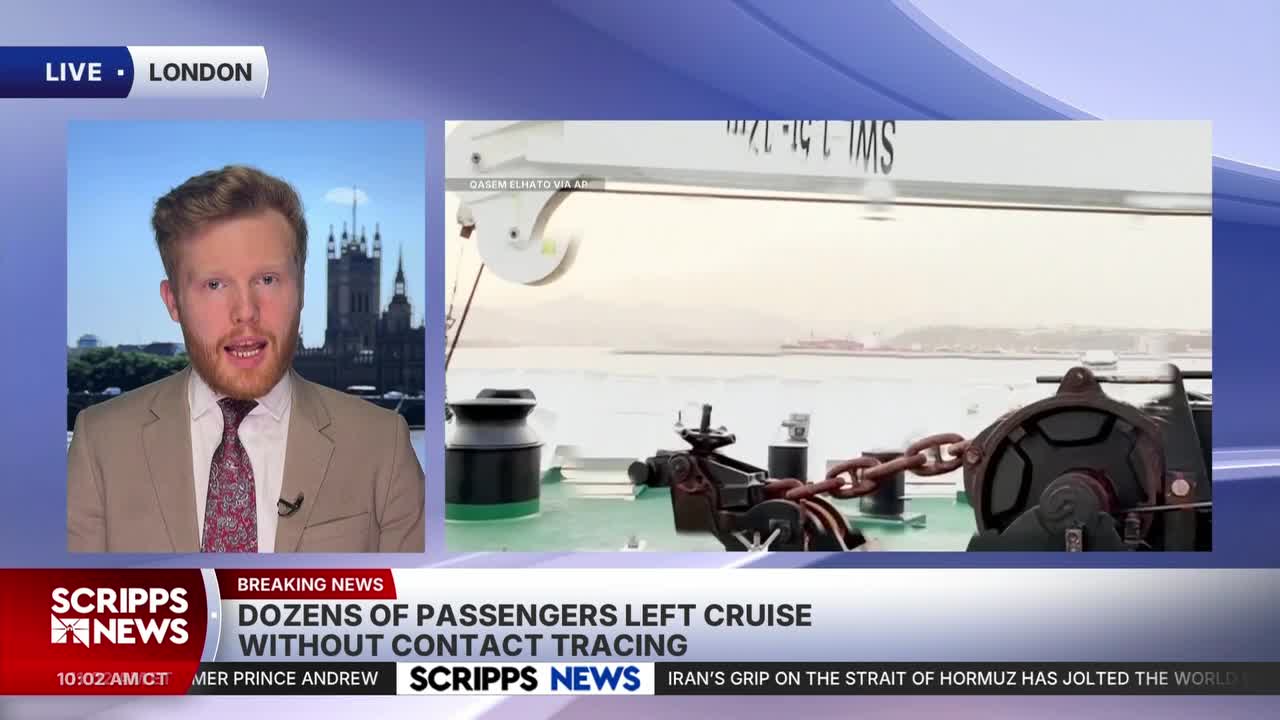


Global health officials are conducting contact tracing after passengers disembarked a cruise ship where hantavirus was later discovered, according to cruise operator Oceanwide Expeditions.
The m/v Hondius departed Ushuaia, Argentina, on April 1 with 130 passengers onboard. During the voyage, three people died and several others became ill with hantavirus. Officials said those with confirmed infections were airlifted from the ship.
According to the World Health Organization, a man became ill on April 6 and died five days later. Health officials initially did not suspect hantavirus because his symptoms resembled other respiratory illnesses.
The man’s wife later disembarked the ship in Saint Helena on April 24 along with 28 other passengers. She flew to Johannesburg the following day and died April 26, according to WHO Director-General Tedros Adhanom Ghebreyesus. A third passenger died onboard April 28.
Health officials said hantavirus was not confirmed on the ship until after the group had already disembarked in St. Helena. Six of the 30 people linked to the incident are U.S. citizens.
The WHO said Thursday there are eight active cases tied to the outbreak, including five confirmed and three suspected infections. Officials warned additional cases remain possible because the virus can incubate for up to six weeks.
While hantavirus is usually spread through contact with infected animals, officials believe these cases involve the Andes strain, which can spread between humans through close, prolonged contact. Health experts said the strain is not known to spread through brief or casual interactions.
RELATED STORY | Ship hit by deadly hantavirus outbreak heads for Canary Islands after 3 are evacuated
Officials said remaining passengers onboard have not shown signs of illness. The ship is expected to dock in the Canary Islands this weekend, though it remains unclear when passengers will be allowed to disembark.
The Centers for Disease Control and Prevention said several Americans onboard have tested positive for hantavirus, but the agency described the risk to the general public in the United States as “extremely low.”
“Our top priority remains the health and safety of all U.S. passengers,” the CDC said in a statement. “The Department of State is leading a coordinated, whole-of-government response including direct contact with passengers, diplomatic coordination, and engagement with domestic and international health authorities. As the world’s leader in global health security, the U.S. government is using our premier health experts to guide our response to this evolving situation. We are working closely with our international partners to provide technical assistance and guidance to mitigate risk.”
RELATED STORY | Sick passengers evacuated from cruise ship amid hantavirus outbreak
Scripps News medical contributor Dr. Omer Awan said about 20 to 40 cases occur annually in the United States and that, except for a rare strain, human-to-human transmission is unusual.
“Usually, people get this virus when they have direct contact with the saliva, urine or feces of rodents,” he said.
For the handful of U.S. cases reported each year, Awan stressed the importance of immediate medical attention.
“It can be very mild to very severe,” he said. “Patients usually have flu-like illness — fevers, chills, muscle aches, body cramps — and sometimes abdominal pain, nausea or vomiting. But after a week or so, some develop lung symptoms, which can include coughing, shortness of breath and difficulty breathing. Very rarely, fluid can build up in the lungs, and that’s when it can become deadly. Nearly one in three patients who develop lung symptoms will end up dying.”
