

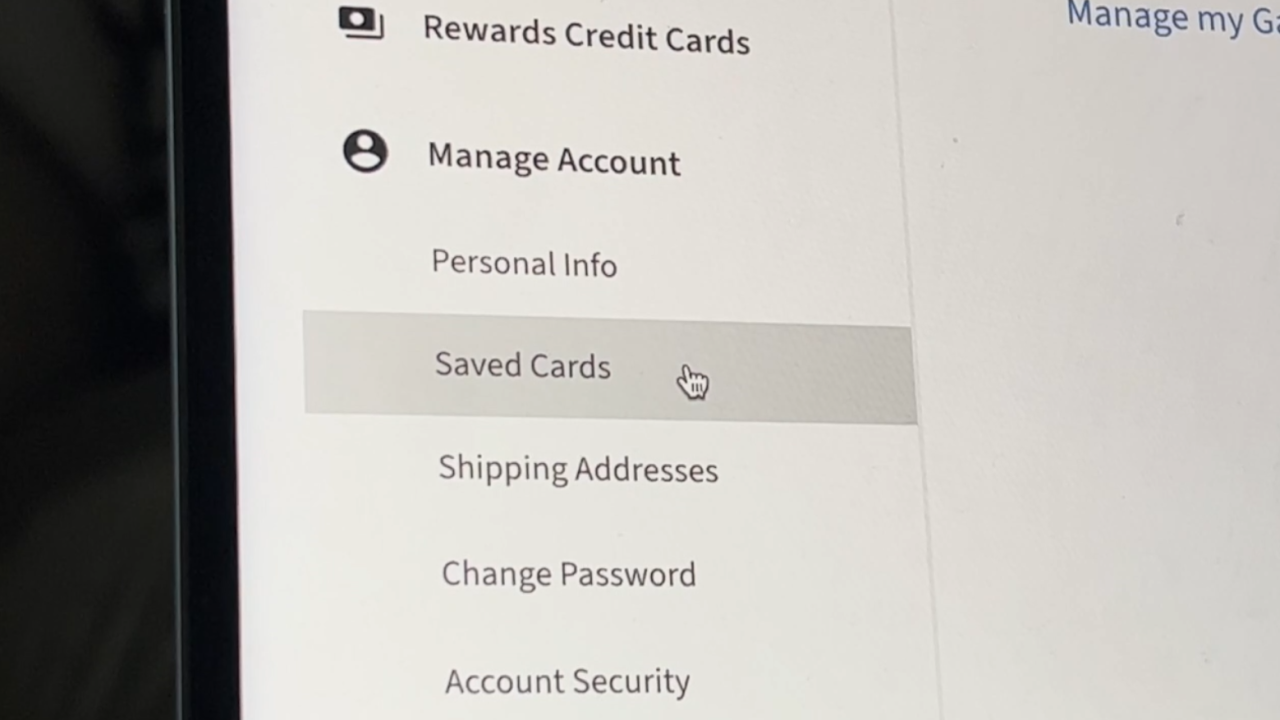

Do you ever save your credit card with online retailers?
One shopper’s warning about storing your credit card information on retail websites could save you from becoming the next victim of online hacking.
Jerry Rouse said he discovered his Gap account was compromised when he woke up to a series of emails showing unauthorized purchases being shipped to California on his credit card.
"I woke up to a series of emails from Gap saying I had placed an order," Rouse said. "It came in at 4:47 in the morning, and then I got another email at 4:48 saying my order had changed its shipping address."
RELATED STORY | Debit or credit: Which card offers better benefits for everyday purchases?
Rouse immediately recognized the hack and is blaming himself, not Gap.
He admitted to using an old password and storing his credit card information on the retailer's website.
"They just got into my Gap account, and my credit card was stored on my Gap account," Rouse said.
WATCH: Online shopping customer shows how thieves got into his account:
Should you store credit card information online?
Similar incidents of fraud actually surge after the holidays, according to Kristin Lewis, digital privacy expert and chief product officer for Aura.
"Part of it is the abundance of new data and transactions and accounts that get created in November and December during the holidays," Lewis said. "People forget about those accounts. Their new data is circulating, and scammers take advantage of that."
While most online accounts remain secure, she warned against saving credit card information for one-time transactions.
"When people have that information once, they can use it to target any type of account that you have," Lewis said.
When saving your credit card information in online accounts, Lewis strongly advised against using the same password across multiple retail websites and encouraged consumers to use password managers for better security.
"You wouldn't leave your house keys all over the place and not change your locks if you lost them," Lewis said.
IN CASE YOU MISSED IT | Financial fitness: Expert advice to start paying down debt in 2026
Potential fraud is not the only downside to think about:
- Impulse purchases: Credit bureau Experian points out that when your credit card information is entered automatically, there’s less of a barrier — making it easier to spend.
- The kid factor: When payment information is stored, tiny hands can make purchases, whether by accident or on purpose.
What about two-factor authentication?
Rouse said he wishes Gap had offered a two-step login, or an extra security measure that would have required confirmation before processing the fraudulent order.
"There was no two-factor authentication," Rouse said. "There was never an email before that saying we noticed an unusual login."
According to the media and research company PYMNTS, only 53% of merchants use per-transaction two-factor authentication.
Without that additional security layer, Rouse said he will no longer store credit cards on retail websites.
"If you find yourself not seeing those extra security measures, I would think long and hard about storing that credit card on that website," Rouse said.
And that way, you don’t waste your money.
____________________________________
"Don't Waste Your Money" is a registered trademark of Scripps Media, Inc. ("Scripps").
Follow John:
- Facebook: John Matarese Money
- Instagram: @johnmataresemoney
- X/Twitter: @JohnMatarese
For more consumer news and money saving advice, go to www.dontwasteyourmoney.com
